An API change can look harmless inside the team that makes it. Renaming a field, adding a required value or changing a status interpretation may take only a few lines of code. A partner's integration can nevertheless stop processing orders because it depends on the previous contract and cannot be updated on the same day.
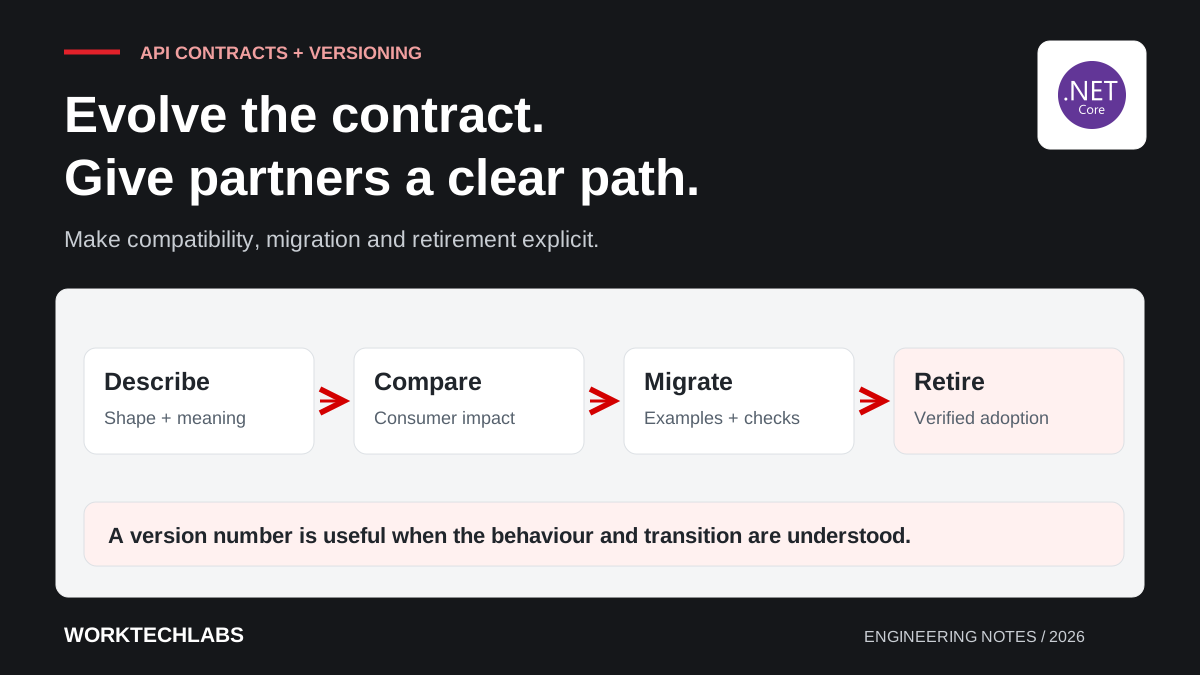
API versioning is a way to manage that coordination problem. It should be supported by clear contracts, knowledge of consumers and an explicit transition process. A version number in a URL does little on its own if nobody can explain what changed or who still relies on the old behaviour.
Define the contract beyond the response shape
List what a consumer is entitled to expect. Include fields, types, required values, error responses, pagination and the meaning of a successful operation. Ordering, date interpretation and whether a request is safe to repeat can matter as much as the visible JSON structure.
For a hypothetical distributor accepting partner orders, “accepted” might mean the request passed validation and entered processing, rather than that stock was allocated. State that distinction explicitly. A partner that treats the response as a dispatch commitment could make incorrect promises even while every request returns a successful HTTP status.
Microsoft's API design guidance discusses interface consistency and versioning approaches. Use those concepts to describe the contract the business intends to maintain. Keep implementation details behind the interface unless a consumer needs them to make a correct decision. Web API design guidance.
Classify changes by their effect on consumers
Evaluate a proposed change using actual client behaviour where possible. Removing a field or making an optional input mandatory is an obvious concern. Adding a new enumeration value can also cause trouble for a client that assumes the existing list is exhaustive.
Do not assume that every additive change is automatically harmless. Review deserialisation behaviour, generated clients and validation rules used by important consumers. Document which compatibility assumptions are supported and include representative client checks in the release process.
Separate a correction to an implementation defect from a deliberate contract change, but consider both effects. A bug fix can still change an outcome on which a partner has built a workaround. Communicate the changed behaviour and provide examples so the integration owner can assess the impact before it reaches production.
Choose a versioning strategy that can be operated
Select an approach that fits the API and its clients, such as explicit path or header versioning. Consistency and supportability matter more than choosing a style because it looks elegant in documentation. Explain how a client selects a version and what happens if that selection is missing or invalid.
Keep the number of simultaneously supported versions deliberate. Each version may require tests, documentation, incident support and security maintenance. A policy that promises indefinite support without accounting for that work can become difficult to honour as the product grows.
Use a written transition policy that names the notice period, support expectations and exception process. The exact terms depend on the relationship with consumers. Ensure product and support teams understand them so an engineering release does not accidentally contradict a commitment made during onboarding.
Publish examples that demonstrate real behaviour
Maintain a machine-readable description where appropriate. The OpenAPI Specification provides a standard way to describe HTTP API interfaces. Use it alongside practical examples rather than expecting a schema alone to explain business meaning. OpenAPI Specification.
Include a successful request, a validation failure and an operation whose completion must be checked later. Show the fields a consumer should store for correlation and support. Ensure examples use synthetic values and remain consistent with the implementation and the selected API version.
Make differences between versions easy to find. A migration note should explain what the consumer must change, why it matters and how to verify the result. Avoid making partners compare two large documentation sets to discover that a status now has a different meaning or an identifier format changed.
Test compatibility through representative consumers
Keep a small set of contract checks for supported versions and important partner behaviours. Validate that an implementation change preserves agreed response shapes and semantics. Where feasible, exercise a representative client rather than testing only the server's internal model objects.
Use staging or a controlled test endpoint to rehearse a migration. Provide meaningful sample data and a way to verify outcomes without creating real orders. Include boundary cases and rejected requests so the partner can validate error handling before a production cutover.
Test versions together when they share the same underlying business data. A record created through one version may be read or changed through another. Define how new information is represented to older clients and prevent compatibility adaptations from silently weakening important validation rules.
Retire versions using evidence and communication
Measure use by consumer and version with appropriate operational identifiers. A quiet endpoint may still support a monthly process, so choose an observation period that reflects the actual business cycle. Avoid interpreting a few days without traffic as proof that a partner has completed its migration.
Contact the relevant integration owners through the business's normal process and record confirmed transitions. Provide an escalation route for consumers that cannot move on schedule. Retirement should be an explicit operational event with monitoring and support coverage, not an incidental side effect of removing old code.
Worktechlabs can help design and evolve business integrations with clear contracts and practical migration paths. Combine versioning with reliable request handling so both the shape of an API and the meaning of its outcomes remain dependable as the product changes.
Official sources and further reading
- Microsoft: web API design best practices — contracts, consistency and versioning considerations.
- OpenAPI Initiative: OpenAPI Specification — describing HTTP API interfaces in a standard format.