
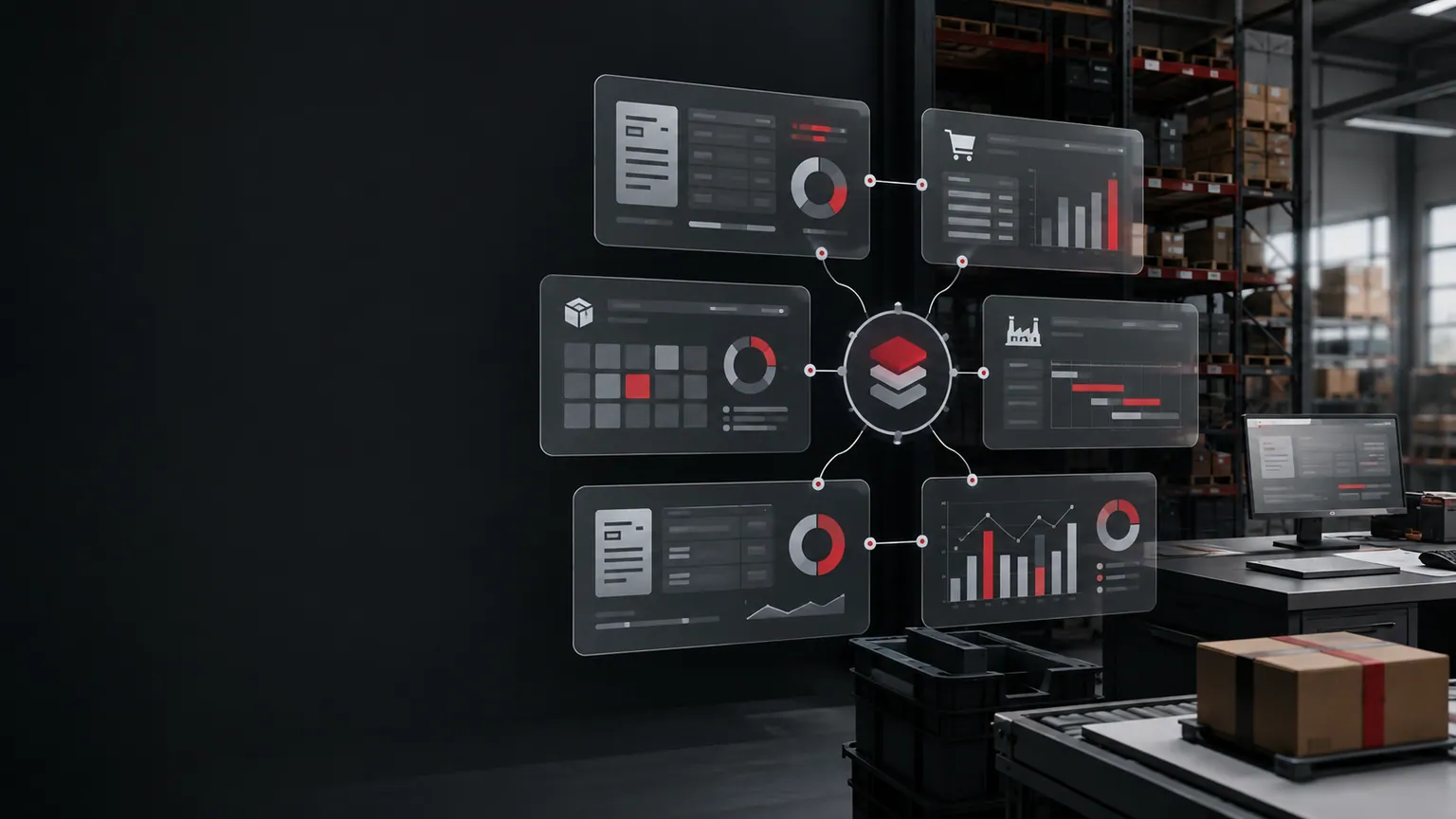
Bespoke ERP development.
ERP software built around your UK business: connect quoting, operations, stock and invoicing, with a phased rollout your team can manage.
An ERP shaped by your operation
A standard ERP can be a good fit when its workflows match your operation. Bespoke development becomes worth considering when quoting rules, approvals or integrations require substantial workarounds. We review those gaps with you and define the modules that would make a practical difference, starting with one process your team can test.
Everything runs on .NET 10, Azure and SQL Server, with role-based permissions and a complete audit trail. Because the system is yours, it can be extended whenever the business changes rather than when a vendor releases a version.
The same figure, entered once
Quoting, jobs and invoicing share a single record, so the same numbers stop being re-keyed from one system into the next.
Reporting from live operations
Margin and workload are read from operational data as work happens, rather than assembled during a month-end consolidation.
What you get from the ERP assessment
Start with a two-week assessment at an agreed fixed price. Bring an example quotation, order or job, the spreadsheets around it and the systems your team uses. We turn that working example into three deliverables:
- A module map. The steps, people, data and integrations involved, with a clear boundary for the first module.
- A phased delivery plan. What to build first, which existing systems stay in use and how your team will check the result before rollout.
- A costed first phase. The proposed scope, assumptions and exclusions, with implementation and ongoing costs identified separately.
For example, a first phase could connect an accepted quote to a job and its invoice while leaving stock management in the current system. We agree the assessment scope and fee before work starts; the software build is quoted separately.
Ask about an ERP assessmentWhat affects the cost of a bespoke ERP?
A useful estimate starts with the work the system must support. These are the main questions we use to define the budget:
- Processes and exceptions: how many workflows, approval steps and pricing rules must the first release handle?
- Existing data: which records need cleaning, migration and reconciliation before your team can rely on them?
- Integrations and access: which accounting, stock or customer systems must connect, and which staff, customers or partners need access?
- Running the system: what hosting, third-party licences, training, support and recovery arrangements are needed after launch?
Compare a custom build and a standard product against the same scope and operating period. Include the work that remains outside either system, such as manual reconciliations or duplicate entry.
- How much does bespoke ERP development cost in the UK? Review the scope, an illustrative budget and the costs after launch.
- Bespoke ERP or off-the-shelf software? Compare both options against the way your business works.
Modules we build
Quoting and sales
Pricing rules, approvals, versioned quotations, conversion to order.
Operations
Job scheduling, assignment, time control and status tracking.
Stock and purchasing
Locations, movements, reorder levels and supplier records.
Invoicing
Billing runs, credit notes, VAT handling and accounts integration.
Documents
Templates, generation, storage and retention policy.
Reporting
Operational dashboards and management reporting in Power BI.
Roles and audit
Granular permissions, full change history, exportable audit log.
Client portal
External access for customers or partners, scoped to their own data.
Planning customer access to orders, documents or service requests? Use our B2B customer portal requirements template.
Frequently asked
1. When is a custom ERP cheaper than a licence?
It depends on the scope and the cost of running each option. Compare implementation, configuration, integrations, migration, licences, hosting, support and future changes over the same period. Bespoke software can make sense when standard products leave expensive gaps, but it is not automatically the cheaper choice.
2. How long before we see something working?
Your team is operating a deployed environment from the second or third week. The first complete module is typically live within eight to twelve weeks, depending on how much historical data has to move with it.
3. What happens to our existing data?
It is profiled, mapped field by field with your team, cleansed against agreed rules and migrated with a reconciliation report you can audit. We rehearse the cut-over against a copy of production before the live run.
4. Do we own the source code?
The bespoke code, infrastructure definitions and documentation are delivered to your own repository under the agreed contract. Hosting, third-party products and any support you choose have their own costs and terms; we identify these when defining the project.
Work with a UK ERP development company
Worktechlabs is based in Arundel, West Sussex. Start with the process that creates the most duplicated work: bring example spreadsheets, the systems it touches and the reports your team needs. We use these to define a first module and its integrations.
See how Maspernet connects case files, documents and invoicing.