
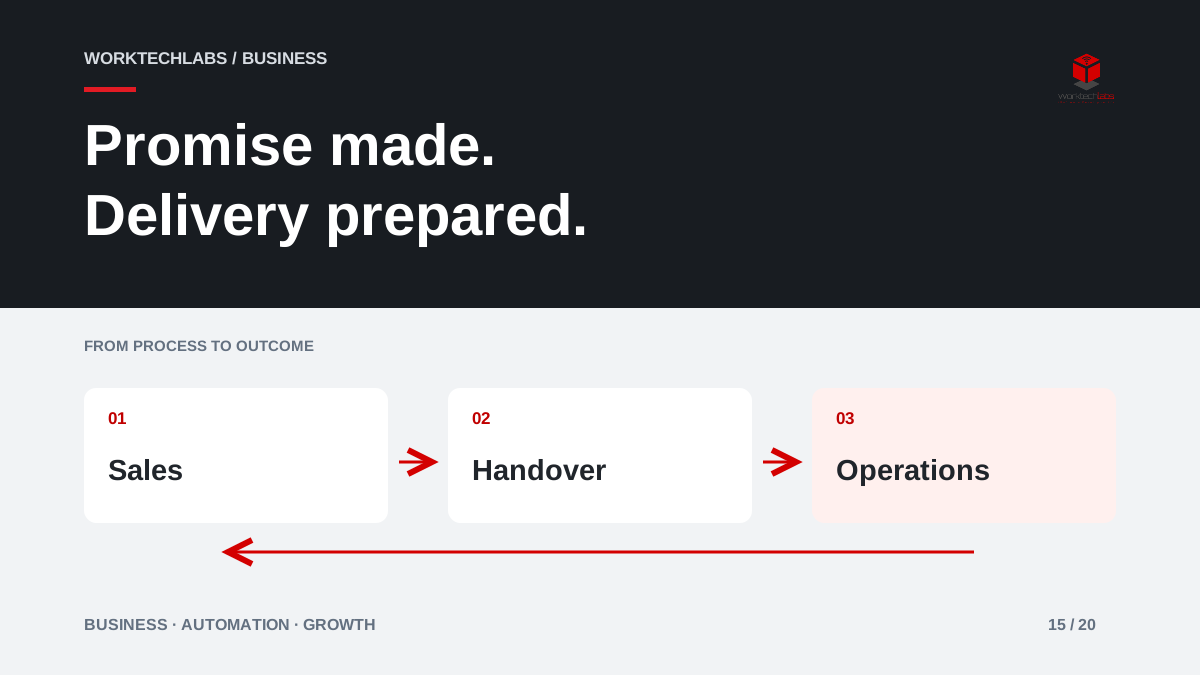
The sale is marked as won, but delivery begins with a search through emails. The customer expects a particular start date, operations has not seen the final scope, and an important exception exists only in the salesperson's memory. The business has completed a commercial milestone without preparing the work that makes the promise real.
A structured handover can reduce this gap. It gives operations an accepted agreement, the context needed to act and a clear route for anything that remains unresolved.
Define when a sale is ready for delivery
“Won” describes a commercial outcome, but it does not always mean that work can begin immediately. Agree the minimum conditions for operational readiness: confirmed scope, relevant contacts, required approvals and the information needed to schedule or fulfil the work.
Keep the two states distinct if they happen at different times. Sales should be able to record a genuine acceptance while making remaining prerequisites visible. Operations should not have to discover those prerequisites by rejecting the order informally. A clear readiness state helps both teams understand what can proceed and who must resolve the rest.
Carry the accepted version forward
Link the handover to the quotation or agreement the customer accepted. Preserve its version, items, quantities, assumptions and exceptions. A draft proposal with different terms should not be the easiest document to find simply because it was attached to the first email in the thread.
Microsoft's Project Operations documentation describes contracts and project stages as structured parts of delivery management. Those concepts are useful references when deciding how an accepted commercial arrangement becomes operational work. Your implementation should make the actual agreement traceable, whether delivery uses an ERP, a project system or a custom application.
Explain the context behind the fields
Structured fields help identify missing information, but some promises need explanation. A customer may have a narrow access window, a dependency on another supplier or a preferred sequence of activities. Record what was agreed and why it matters so the delivery team can make informed decisions.
In an illustrative office refurbishment project, “start Monday” may mean that the customer expects a site assessment on Monday, not a full installation. Without context, both teams can believe they have received a clear date while understanding different commitments. The handover should remove this ambiguity before the customer experiences it.
Give operations a way to accept or clarify
Do not treat sending a notification as proof that the handover succeeded. The receiving team needs to review the work and either accept readiness or request specific missing information. Give clarification requests an owner and a visible status so they do not become a separate, forgotten email conversation.
Define what operations may correct directly and what requires a commercial discussion. Fixing an internal reference is different from changing the delivery scope. If a correction affects the customer agreement, involve the person authorised to discuss it and keep the accepted version intact until the change is agreed.
Connect handover to scheduling and communication
Once the work is ready, create the relevant order, project or service task with the agreed information. Return the operational reference and useful status to sales so the account owner can answer questions. Avoid leaving the customer with one reference in the quotation and another unexplained reference in delivery emails.
Make responsibility for the first operational message explicit. The customer should know who will lead delivery, what happens next and whether any action is required. A smooth internal transfer matters because it produces a coherent external experience, rather than making the buyer wonder whether the company has forgotten the sale.
Measure rework at the boundary
Track the time from acceptance to readiness, handovers returned for clarification and changes discovered after work starts. Categorise the missing information so recurring issues can be fixed at their source. If delivery repeatedly asks the same question, it may belong earlier in qualification or quoting.
Review the impact on sales workload as well. A handover form that demands every possible detail can discourage use and delay simple orders. Keep the required information proportional to the service and use conditional questions where they genuinely change delivery. The aim is a complete, usable handover, not a long document that nobody trusts.
A first handover workflow with Worktechlabs
Choose one type of sale and map the minimum information operations needs to begin. Test a normal handover, a missing prerequisite, a revised agreement and a time-sensitive exception. Ask the receiving team to prepare the work from the record without help from the original salesperson; that quickly exposes gaps in the design.
Worktechlabs can help connect your CRM with ERP or delivery applications, preserving agreement history and operational ownership. Share a recent sale that became difficult to deliver. We can use the handover points to identify a focused change that helps your business fulfil promises consistently as customer volume grows.
Official sources and further reading