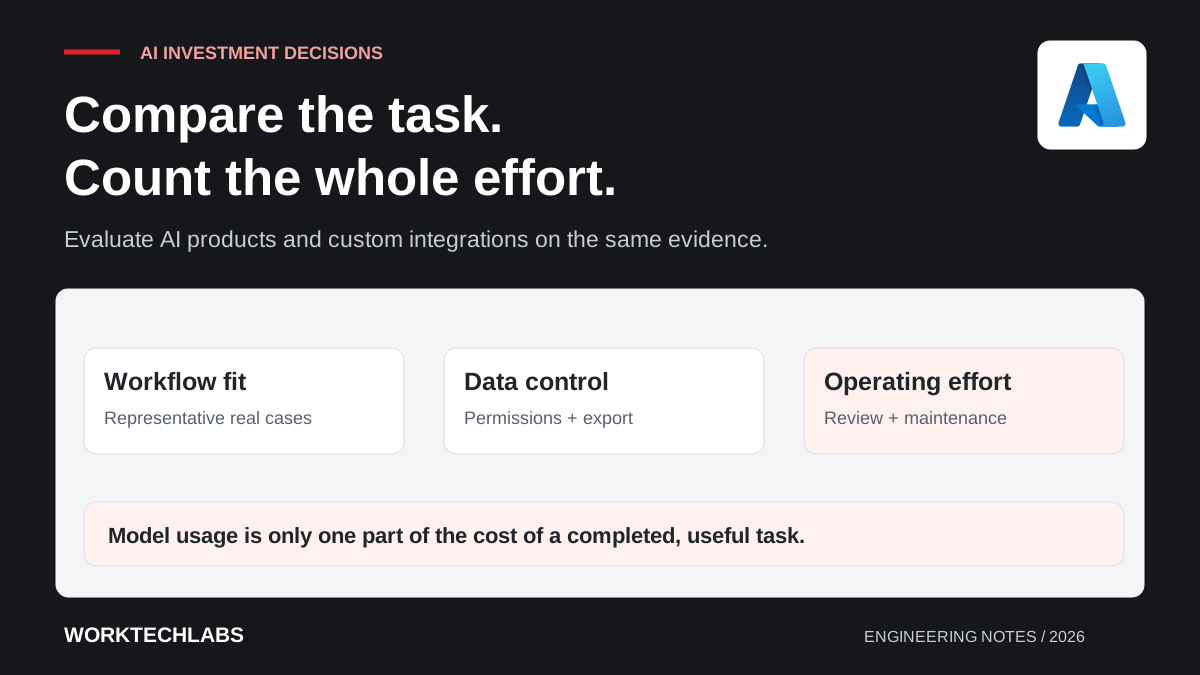
An AI feature can be bought as part of an existing product, assembled from managed services or built as a custom application capability. Those choices differ in how much control the business receives and how much integration, evaluation and support it must own. The subscription price is only one part of the decision.
A useful comparison starts with a real task and the evidence needed to judge it. If the options are evaluated through unrelated demonstrations, the team may select the most impressive presentation rather than the capability that best fits its workflow. Define the problem once, then ask each option to solve the same representative cases.
Separate the product from the underlying model
Buying an AI-enabled product usually means buying an interface, workflow and operating arrangement as well as model access. Building a feature does not necessarily mean training a model. A custom application can use a managed model while owning its integration, permissions and review experience.
This distinction prevents an unhelpful comparison between a finished product and the price of an API call. The API route still needs application development, data handling, monitoring and ongoing evaluation. The finished product may still need configuration, connectors and changes to the business process.
Microsoft's AI strategy guidance for SaaS businesses discusses different layers of AI capability and the choices around assembling them. Use that distinction to identify which parts your business actually needs to control before deciding how much to build.
Write the task and acceptance criteria first
Choose a bounded workflow: classifying incoming requests, proposing fields from documents or preparing a staff briefing. Record the inputs, expected outputs and the decisions that still belong to a person. Include the information the feature must not access or disclose.
Create representative evaluation examples with knowledgeable staff. Include ordinary cases, ambiguous cases and inputs the feature should reject or escalate. Agree how the results will be judged and which mistakes have the greatest operational consequences.
For a hypothetical facilities business, a useful trial could compare how options turn supplier documents into proposed job records. The evaluation should include incomplete references and unusual document layouts, not just clean examples supplied by the vendor. The same cases give the team a consistent basis for comparison.
Examine workflow fit and review effort
Observe the complete task in each option. Measure how information enters the system, how the user checks the proposal and how the approved result reaches the application that owns the transaction. A feature that saves generation time can still add copying, checking or reconciliation work.
Check whether exceptions fit the real operating process. Can staff correct a field, retain the original document and explain why they overrode a suggestion? Can difficult cases return to manual handling without losing their history? These details often determine whether people continue using the feature after the initial trial.
Ask users to work with the candidate system, rather than only watching a demonstration. Record where they hesitate, where they need additional evidence and how often they move to another application to finish the task. Practical friction is part of product fit, even when the model's output appears strong.
Verify data access and control
Determine which systems supply the data, what permissions are required and how those permissions change when a user leaves or changes role. A connector that can reach a repository does not automatically preserve the application's customer boundaries and record-level rules.
Review the provider's current data-handling terms, configuration options and supported deployment arrangements with the responsible stakeholders. Record what is confirmed and what needs clarification. Avoid assuming that every product using the same model has the same retention, access or processing behaviour.
Inspect export and correction routes. If the business finds inaccurate source information, how does the change reach the AI feature? If a document should no longer be used, how is it removed from retrieval and retained copies? These are operating questions that should be answered before the workflow becomes dependent on the product.
Compare full operating costs
Include implementation, configuration, integration, licensing or usage, human review and support. For custom development, account for evaluation work and maintenance when models or external APIs change. For a purchased product, account for the effort required to work within its workflow and extension limits.
Build scenarios around realistic task volume and document size. Check current pricing and commercial terms directly when preparing the actual estimate, including any relevant limits or overage conditions. Avoid projecting a demonstration's small usage pattern across the business without examining how staff will really use it.
Track cost per completed useful task during the trial. Include retries and rejected output, not just successful model calls. A cheaper option may require more correction, while a more expensive option may provide useful controls that reduce operating work. The comparison needs evidence about the complete process.
Understand the dependency you are creating
Every option introduces dependencies. A purchased product may constrain workflow changes and data export; a custom application may depend on specialised internal knowledge and a model provider's interface. Write down which changes would be difficult and how the team would respond.
Ask how model updates are handled. Can changes be evaluated before they affect the workflow? What information is available about configuration and versioning? A familiar interface can still produce different results after its underlying capability changes, so ongoing evaluation remains relevant after purchase.
Plan an exit or fallback that matches the importance of the task. This might be manual processing, an alternative search interface or a documented export format. The objective is an understandable continuity plan, not a promise that switching vendors will be effortless.
Use a decision gate before expanding
Set a defined trial scope and review the results against the original acceptance criteria. Record accuracy, review effort, operational failures and the work still required to integrate the option. Distinguish capabilities demonstrated in the trial from features described only in a roadmap.
Choose an option because its trade-offs fit the business, and document the conditions that would trigger reconsideration. A standard product may suit a conventional task, while a custom integration may make sense where the workflow or permissions are central to the business's differentiation.
Worktechlabs helps evaluate business AI opportunities and implement the surrounding application controls. Our guide to adding AI to legacy applications explores the custom-integration route. A good decision gives the business a useful capability with an operating responsibility it understands and can sustain.