
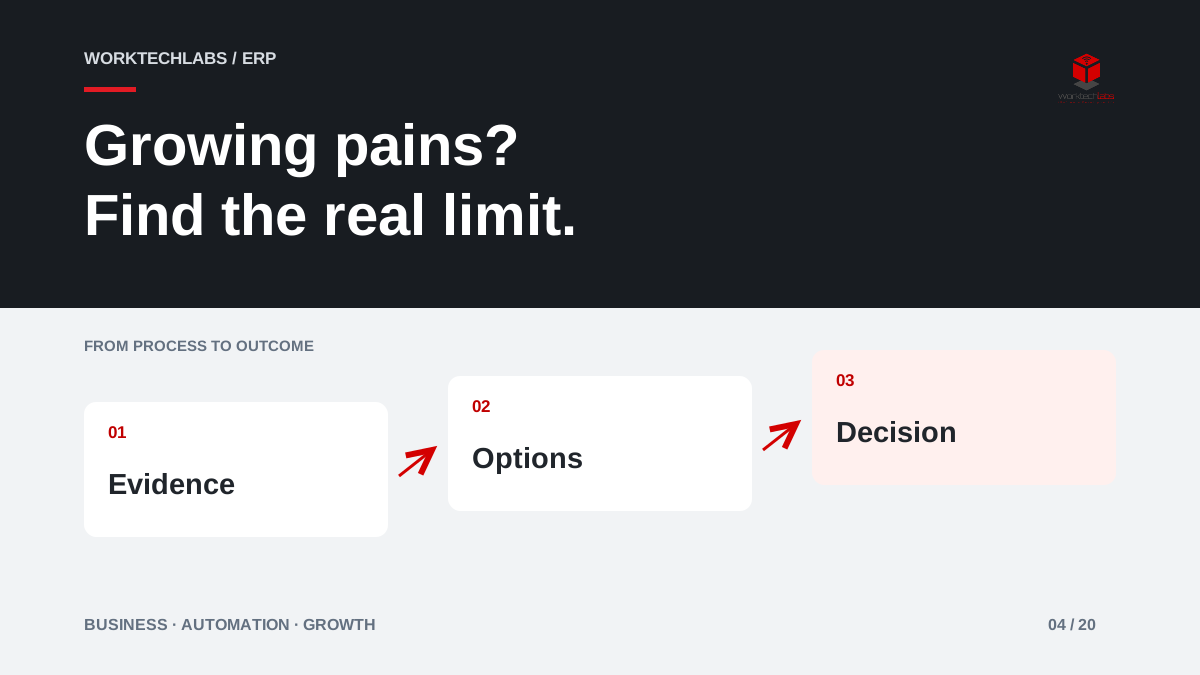
Growth often exposes weaknesses that a smaller team could work around. Orders increase, more people need the same information, and the spreadsheet that once felt flexible becomes difficult to trust. A new ERP may help, but replacing software is a substantial business project. The right starting point is evidence about what is preventing the company from serving customers well.
An ERP should support the way the business needs to operate. It should not become an expensive explanation for problems that remain undefined.
Look for recurring limits, not occasional frustration
One difficult month does not establish that your current system has reached its limit. Look for patterns across several business cycles: repeated stock discrepancies, manual reconciliation between departments, orders that depend on one person's knowledge or reports that arrive too late for decisions.
Record the consequence of each problem. “The software is old” is less useful than “staff confirm delivery dates without a dependable view of outstanding orders.” The second statement identifies a customer promise at risk and gives you something to test in a replacement. It also leaves room for a smaller improvement if the existing system can support the required behaviour.
Separate process problems from product limitations
If nobody agrees who approves a purchase, a new approval screen will not create agreement. If product records are duplicated, moving them into a modern database preserves the confusion. Interview the people doing the work and follow representative transactions before writing a list of desired features.
Classify findings into unclear rules, poor data, missing integration, difficult user experience and genuine capability gaps. Several categories may contribute to the same symptom. A late order might involve inaccurate stock, an informal approval and a disconnected scheduling tool. Understanding the combination helps you estimate the work required and avoid expecting one product to solve everything automatically.
Define the business capabilities you need
Describe capabilities using scenarios that matter to customers and staff. For example: enter an order once, check available stock, reserve the correct items, confirm delivery and show progress to sales. Include returns, cancellations and substitutions, because a system that handles only the easiest order will not reflect normal business.
Microsoft's process-focused implementation guidance is a useful reference for evaluating solutions through business processes. Build your own demonstration script from real examples with sensitive details removed. Ask vendors or implementation partners to show the complete journey, including an exception, rather than selecting a product from a polished tour of unrelated screens.
Compare replacement with credible alternatives
Consider improving configuration, connecting existing systems, adding a customer portal or modernising a specific legacy module. A replacement becomes more compelling when important limitations are widespread, supportability is poor or the cost of maintaining workarounds keeps growing. A narrow integration may be sufficient when the core transaction system is dependable.
Compare the total work involved in each option. Include data preparation, integration, implementation, staff time, training, support and the transition period. Licence prices alone do not describe the investment. Equally, a low initial development estimate can be misleading if it omits the responsibility to maintain custom functionality over time.
Test whether the organisation is ready to change
A project needs business owners who can make decisions, users who can validate workflows and time to prepare data. If every knowledgeable employee is already fully occupied, the plan must create capacity for their involvement. Treating their contribution as spare-time work increases uncertainty and slows decisions.
Choose who will own each process after launch. Agree how changes to scope are evaluated and how unresolved issues reach a decision. An ERP implementation affects routines, responsibilities and reporting; it cannot be delegated entirely to an external technical team. The company's involvement is part of the delivery plan, not an optional meeting invitation.
Set a measurable first outcome
Select a business result that a first phase can demonstrate: fewer orders needing re-entry, more dependable stock information or a shorter delay between order acceptance and scheduling. Establish a baseline using a representative sample. Avoid targets that depend entirely on market demand, such as promising a fixed increase in new customers from an internal system change.
Define what must remain reliable during transition. Customers still need correct orders and clear communication while the implementation runs. Decide which transactions enter the new system first, how existing work finishes and how the team will reconcile information across the boundary. Readiness includes the ability to keep operating during the change.
A practical decision with Worktechlabs
Worktechlabs can help assess the current application, map operational limits and compare a focused improvement with a broader ERP project. The useful output is an evidence-based recommendation, a realistic first scope and the business participation needed to deliver it.
If growth is creating more administration than your team can manage, share the recurring problems and the systems involved. That conversation can establish whether you need a new ERP, a better connection between existing tools or a staged improvement that prepares the business for a later replacement.
Official sources and further reading