
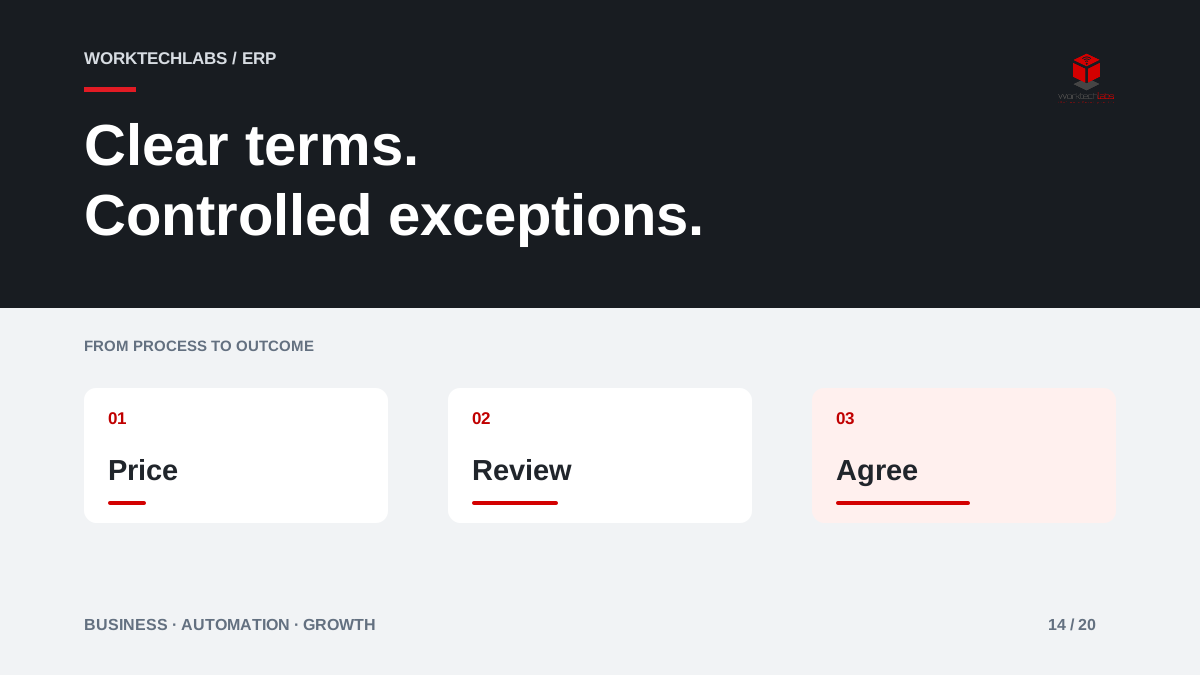
A salesperson offers a discount to help close an opportunity. Another includes extra delivery work, and a third uses an old customer price list. Each decision seems reasonable in isolation, but the business cannot easily explain which terms apply or whether the final order reflects an approved agreement. Commercial controls can make selling more consistent without turning every quotation into a management bottleneck.
The aim is to give staff clear room to act and a dependable route for exceptions. Automation works best when the underlying pricing decisions are already understood.
Establish the current commercial agreement
Identify where standard prices, customer-specific agreements and promotional terms are maintained. Record their effective dates and scope. A price that applies to one product group or delivery arrangement should not become a general account discount simply because a spreadsheet has only one available column.
Microsoft Business Central documents sales prices and discount agreements as structured commercial information. Whatever system you use, make the current rule visible at quotation time. Staff should not have to search old emails to decide whether a customer's special terms are still valid or whether a manager approved a one-off exception last year.
Include the whole offer in the review
A discount percentage does not describe every concession. Free delivery, extended support, extra configuration or a shortened lead time may change the work required. Include these commitments in the offer and in the approval context so a reviewer can assess the actual arrangement.
In an illustrative installation business, the product price may remain unchanged while the quotation includes an additional site visit. If that visit is hidden in a note that operations never receives, the apparent commercial control offers little protection. The process should make relevant obligations visible to both the approver and the team expected to fulfil them.
Give staff clear decision boundaries
Define which routine offers sales can issue directly and which conditions require review. Boundaries may depend on product, customer agreement, quantity or unusual service commitments. Keep the rules understandable enough that staff can explain why a particular offer needs approval.
Avoid requiring a manager to review every standard quotation. That can slow customers down without improving decisions. Equally, avoid broad exceptions that allow an unusual order to bypass review merely because its discount falls below one threshold. Use the pilot to discover which combinations matter in your business rather than importing a generic policy unchanged.
Provide context for approval and revision
An approval request should show the proposed terms, the reason for the exception, the customer's decision deadline and the current quotation version. If the reviewer needs to search three systems before understanding the request, the workflow has moved the waiting without removing its cause.
When a material condition changes, identify whether the existing approval still applies. A quote lifecycle, such as the one documented in Dynamics 365 Sales, can help separate drafts, issued offers and revisions. Preserve the agreement actually sent to the customer and the decision associated with it. Staff need to explain changes with confidence when the buyer asks why a revised total differs.
Carry approved terms into the order
The accepted quotation should create an order that reflects its approved items and commitments. Prevent a later integration from silently replacing an agreed price with a different default. At the same time, define how expired offers and changed quantities are revalidated before confirmation.
Make discrepancies visible before work begins. If the order differs from the accepted proposal, someone should review the difference and communicate any required change. Discovering it only when an invoice is challenged turns a preventable process issue into a customer relationship problem.
Measure exceptions and decision quality
Review the number of quotations needing approval, the reasons, the waiting time and the frequency of corrections after acceptance. A growing volume of identical exceptions may indicate that the standard rules no longer fit the market or the service, rather than that staff are behaving incorrectly.
Commercial analysis should use cost definitions agreed with the business's finance team. Distinguish an operational estimate from a final realised result, and avoid presenting incomplete cost information as a precise profitability measure. The system should make assumptions visible so decision-makers understand what the figures include and what still needs review.
Make a first improvement with Worktechlabs
Start with one quotation family and document its standard terms, supported exceptions and approval ownership. Test a routine offer, a customer agreement nearing expiry, a revised quantity and an extra service commitment. Have sales, operations and the appropriate commercial owner review the resulting order together.
Worktechlabs can help connect these rules with your ERP and quoting workflow, preserving the accepted agreement and making exceptions easier to manage. Share where pricing decisions currently depend on email or memory. We can identify a focused change that helps the team respond consistently while keeping important commercial decisions visible and accountable.
Official sources and further reading