In a small software team, the same person may write a feature, publish it and answer the support message when it fails. That proximity can be an advantage: there are fewer organisational barriers between a decision and its consequences. It becomes a problem when essential knowledge stays in one person's head and every interruption stops the team's planned work.
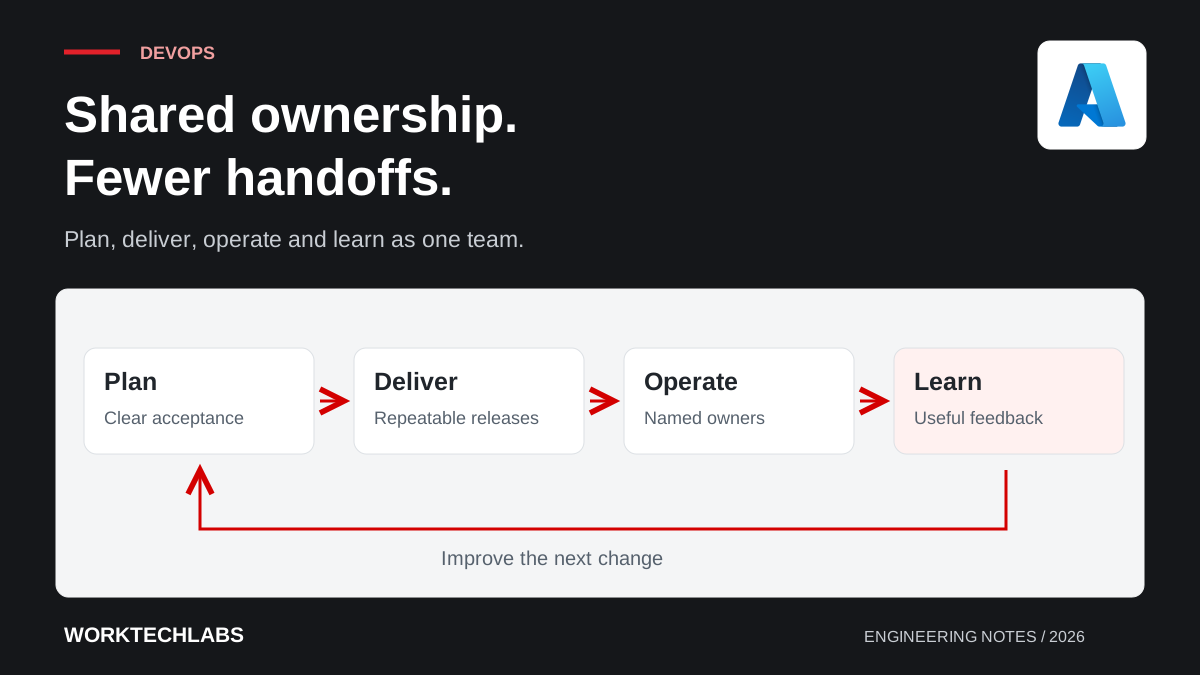
DevOps provides a way to improve that situation through shared responsibility, repeatable work and feedback from production. Buying a tool with “DevOps” in its name does not create those habits. The useful outcome is a team that can deliver changes, understand their effect and support the application without relying on constant individual heroics.
Start with the handoffs that cause delay
Follow one recent feature from its initial request to real use. Note where it waited: clarification, design approval, a code review, an environment, a release slot or a response from another supplier. This simple exercise often shows that time spent coding is only part of the delivery timeline.
Choose one repeated delay to improve. If developers regularly finish work that the business then rejects, clearer acceptance examples may matter more than a new deployment tool. If changes wait for access to a staging environment, environment ownership needs attention. The point is to solve the constraint the team actually has.
Use the same method for support. Follow an incident from the first report to resolution and identify missing information. A support message that says “the system is slow” requires investigation before anyone can act. Capturing the affected workflow, time and relevant reference number can shorten that investigation considerably.
Define shared responsibility in concrete terms
Shared ownership should not mean that everyone is vaguely responsible for everything. Name an owner and a backup for each important service. Record who can approve a release, who responds to an alert, who communicates with users and who decides whether to restore an earlier version.
For a small team, several responsibilities can belong to the same person. The important distinction is that the work is visible and another person knows how to step in. A short ownership page with links to the deployment process and runbooks is often enough to begin.
Encourage questions and the early reporting of problems. DORA's work on organisational culture highlights the role of information flow and cooperation. In practice, a developer who can raise an uncertain release condition early gives the team more choices than one who feels pressure to hide it until production fails.
Make one delivery route easy to follow
Document the normal route from a proposed change to a running application. Include review expectations, automated checks, deployment steps and the evidence required before release. Keep it short enough to use. If the process exists only as a large document nobody opens, it is unlikely to survive a busy week.
Automate steps that are repetitive, error-prone and well understood. Start with build and deployment consistency, then improve verification as the application evolves. A repeatable process also gives the team something concrete to review when a release goes wrong.
Keep an emergency route, but define it in advance. An urgent fix may justify a smaller change and faster decision, yet it still needs an identifiable package, a responsible person and a check that the service has recovered. Record any checks deferred during the emergency and schedule the follow-up while the context is fresh.
Put operational needs into feature planning
A feature is incomplete if the team cannot tell whether it is working. During planning, describe what the user will do, what failure looks like and what support staff need to investigate a problem. Those details influence the implementation just as much as the screen layout.
For a new invoice import, the operational design might include a status for each upload, a clear reason for rejected rows and a safe retry route. This reduces the need for a developer to inspect the database whenever a file fails. It also gives the business a better experience without adding a separate operations department.
Agree a practical definition of completion. It might require acceptance checks, deployment instructions, relevant telemetry and a named support owner. Scale the detail to the change. A wording adjustment should not require the same operational review as a new payment integration.
Use monitoring to prompt an action
Start with a few signals connected to important workflows. Can users sign in? Are orders being accepted? Is a background queue accumulating work? Which dependency is preventing completion? Technical resource charts remain useful, but they should support an understanding of service health.
Every alert needs an intended response. Identify who receives it, what they should check first and when to escalate. Remove or adjust alerts that repeatedly trigger without requiring action. A noisy channel makes the rare useful notification easier to miss.
Consider support hours explicitly. If the business requires continuous response, provide staffing and escalation arrangements that make it sustainable. If support is limited to working hours, document what happens overnight and ensure stakeholders understand the trade-off. Do not create an accidental expectation that one engineer is always available.
Learn from incidents without losing accountability
An incident review should explain what happened, how it affected users, how the team detected it and what helped restore service. Use a timeline built from evidence rather than assumptions about individual intentions. Separate the triggering change from conditions that allowed the problem to spread or remain unnoticed.
For example, a hypothetical configuration mistake might trigger an outage, while a missing validation check and an unclear rollback process make it last longer. Correcting only the configuration leaves those other weaknesses in place. Useful follow-up work addresses the conditions the team can change.
Assign owners to a small number of concrete actions. “Be more careful” is difficult to verify. “Reject deployment when the required queue endpoint is missing” describes a change with observable behaviour. Review unfinished actions during normal planning so they compete honestly with feature work rather than disappearing into a separate backlog.
Protect time for maintenance and improvement
If every available hour is committed to features, reliability work happens only after something breaks. Reserve capacity for dependency updates, recurring support problems and improvements to the delivery process. The amount depends on the condition of the application and the commitments made to customers.
Track repeated manual work. If the same data correction or environment repair happens each week, estimate its cost and investigate the cause. Sometimes the best improvement is automation; sometimes it is a clearer business rule or a small product change that prevents the problem.
Keep the operating model proportionate. A shared checklist, a reliable pipeline and two people who understand recovery can be a strong foundation. Add complexity when a real constraint justifies it, and remove procedures that no longer help the team make decisions.
A practical first month
Start by mapping one feature and one incident, naming service owners and documenting the current release route. Then improve one recurring source of delay, add monitoring for a critical journey and rehearse the recovery process with the backup owner. At the end of the month, review what became easier and what still depends on personal memory.
Worktechlabs can help with support and maintenance, code review and technical documentation, and the CI/CD practices that make shared responsibility easier to carry. The objective is a team that can keep improving the product while remaining able to explain and operate what it has already shipped.