A consultancy can have a strong offering and still be difficult to understand online. Specialist services share terminology, overlap with one another and often need more explanation than a short card can provide. For someone discovering the business, the question is much simpler: can this company help with the problem I have?
That question helped shape the website for ORBIS Enterprise Solutions, developed by Worktechlabs. ORBIS supports small and medium-sized organisations with quality management, integrated management systems, supplier assurance, auditing and training. Our work brought its brand and commercial content into a navigable website, supported by tools for keeping that content current.
The website has been delivered in a protected client preview environment. The screenshots in this article show that working version before public launch. Our ORBIS project case study also sets out the scope and the technology behind the delivery.
Turn expertise into a route through the website
The starting material included a brand guide and a substantial set of approved website copy. Having the content ready is valuable, but it does not automatically produce a good visitor experience. Someone still has to decide what comes first, what deserves a separate page and how related subjects connect.
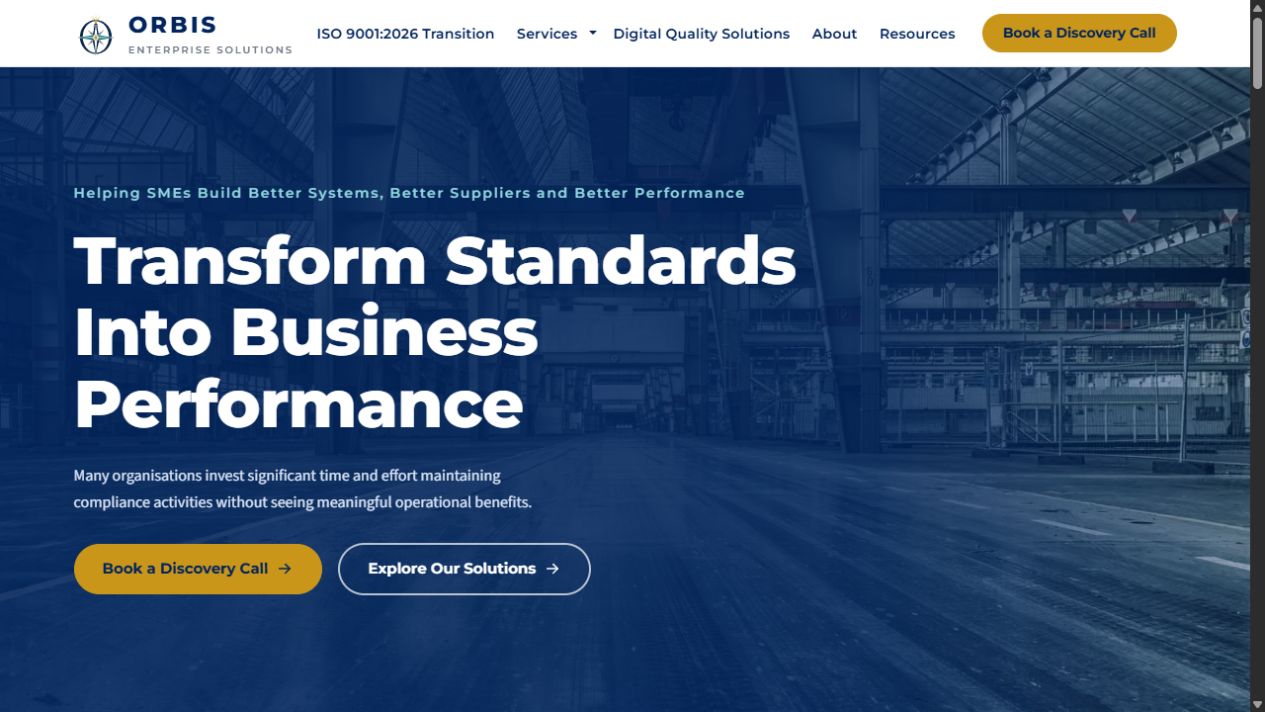
For ORBIS, the home page introduces the purpose of the business and its main areas of support. Visitors can then explore the service overview, investigate a particular service or start a conversation. Detailed pages explain the challenge, the support available and a next step. The reading becomes more specific as the visitor progresses.
This structure also gives the navigation a manageable job. It acts as an index rather than trying to explain the whole company. A manager interested in supplier assurance can follow that route without first reading every section about internal auditing or training. The website supports different starting points while keeping the overall offer connected.
Use the brand to organise reading
ORBIS has a distinctive navy, teal and gold palette. Applying those colours is a question of hierarchy as well as appearance: headings, backgrounds, navigation and calls to action have different roles within a page.
The design combines that palette with typography, spacing and photography associated with working environments. On a long page, repeated patterns help people recognise where a service begins, where its details sit and how to contact the business. Readers can spend their attention on the information rather than repeatedly working out how the interface behaves.
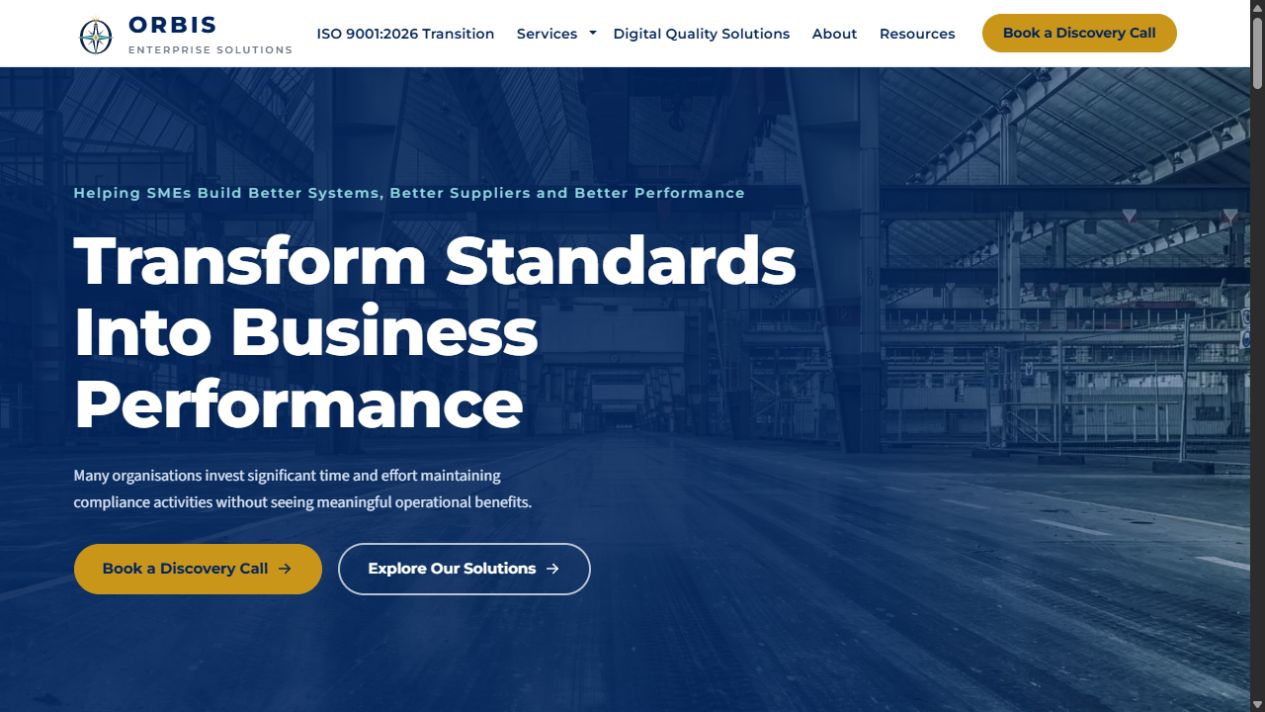
The client preview home page, captured in November 2026.
The same identity adapts to different screen sizes. Navigation and layout respond to the available space while preserving the relationship between the explanation and its next action. A mobile visitor still needs to understand the service and reach the contact route; those tasks remain central when the desktop columns become a narrower layout.
Give each service page a clear purpose
A commercial page should answer recognisable questions. What situation does the service address? What support can the business provide? How does a prospective customer begin? Those questions give specialist terminology a useful context.
The ORBIS service overview provides orientation. Individual pages expand on management systems, supplier assurance, auditing, quality leadership and training. Editorial resources offer another level of reading for people who are still working out what they need. Each part has a role without requiring every visitor to consume all of it.
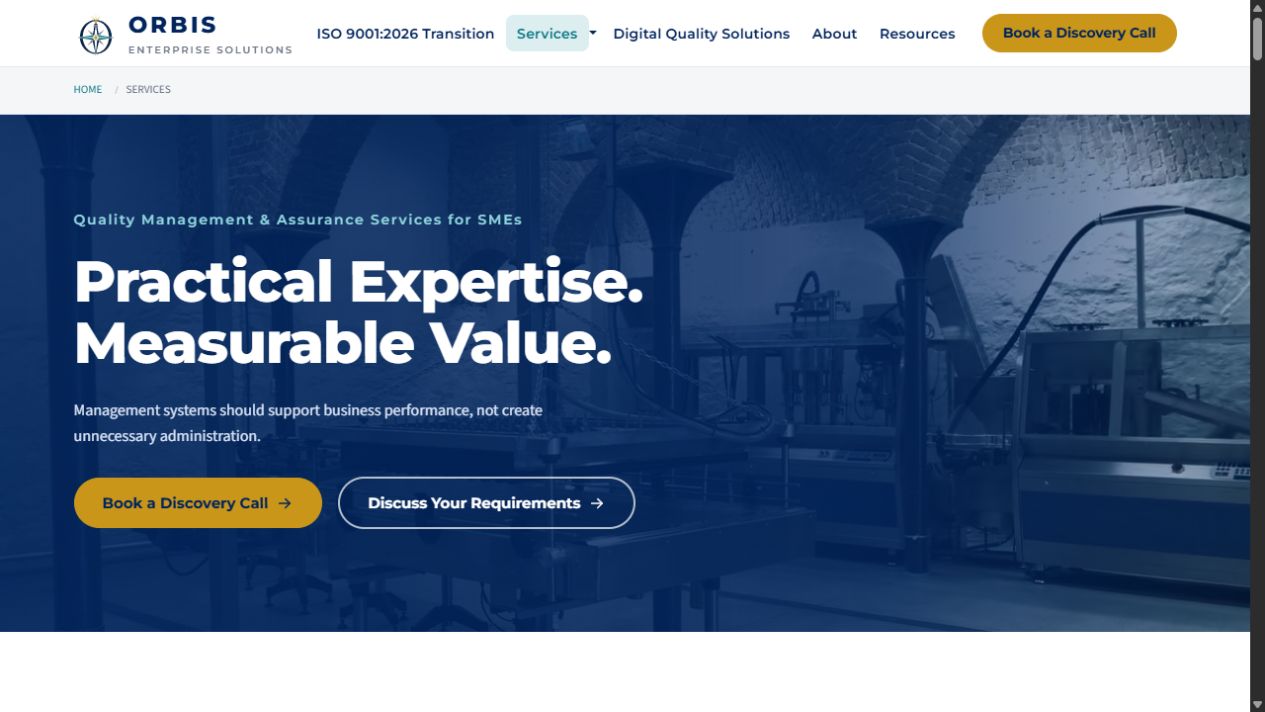
The services page maintains the visual identity and introduces routes into each specialism.
Calls to action distinguish a consultancy conversation from an enquiry about digital solutions. That distinction preserves useful context. Someone investigating a software tool can take a different next step from someone seeking support with an audit programme, even though both interests belong to the same wider offering.
Design for the people who will maintain it
A corporate website changes as a business develops. Services are revised, new questions emerge and articles need preparing. The project therefore includes an editorial management area for pages, sections, images and publications.
Structured sections help maintain a consistent visual language while allowing pages to have different content. Drafts and scheduled publishing separate preparation from release. The team can work on a piece before deciding when it should become available to visitors. This makes the management experience part of the delivery rather than an afterthought.
The underlying model also supports translations. The reviewed version is in English; another language needs its content prepared and explicitly enabled. Designing that support early gives the business a route to expand, while keeping a clear distinction between technical capability and translations that are actually available.
Preserve context when someone makes contact
Contact is part of the commercial journey. The forms let a visitor identify themselves, their organisation and their area of interest. Submissions are stored for review in the management area, providing a useful starting point for the team's response.
The website also explains the relationship between ORBIS consultancy and Worktech Labs digital solutions. Our delivery here is the corporate website and its content management tools. The quality management platforms described on its pages are separate products with their own scope. Presenting them clearly is one of the website's tasks.
Keeping that distinction visible makes the project easier to assess. This case describes an information and enquiry experience, with editorial tools to support it over time. It does not claim to demonstrate every operational workflow of the software products mentioned in the copy.
Put the technology behind the content
The implementation uses .NET 10, Blazor, Entity Framework Core and SQL Server. Public pages are rendered on the server, while the management area uses interactive components. Each part can therefore suit its particular job: presenting content to a visitor or providing editing tools to the team.
Page metadata, canonical URLs, a sitemap and language-aware routing form part of that implementation. These provide a consistent foundation for publication and maintenance. They do not replace editorial work or establish a measured increase in rankings or enquiries. Those outcomes would require evidence from actual use after launch.
What the project delivers
ORBIS now has a website connecting its brand, services, resources and contact routes, together with a management area for maintaining them. The next milestone is completing client review and opening the site publicly. Real usage can then inform which explanations need refining and which recurring questions deserve new resources.
For a service business, the practical lesson is to consider the customer's journey and the editor's work together. At Worktechlabs, our bespoke .NET development starts with that business context. If you are planning a corporate website, tell us about your project and the information your customers need to find.