
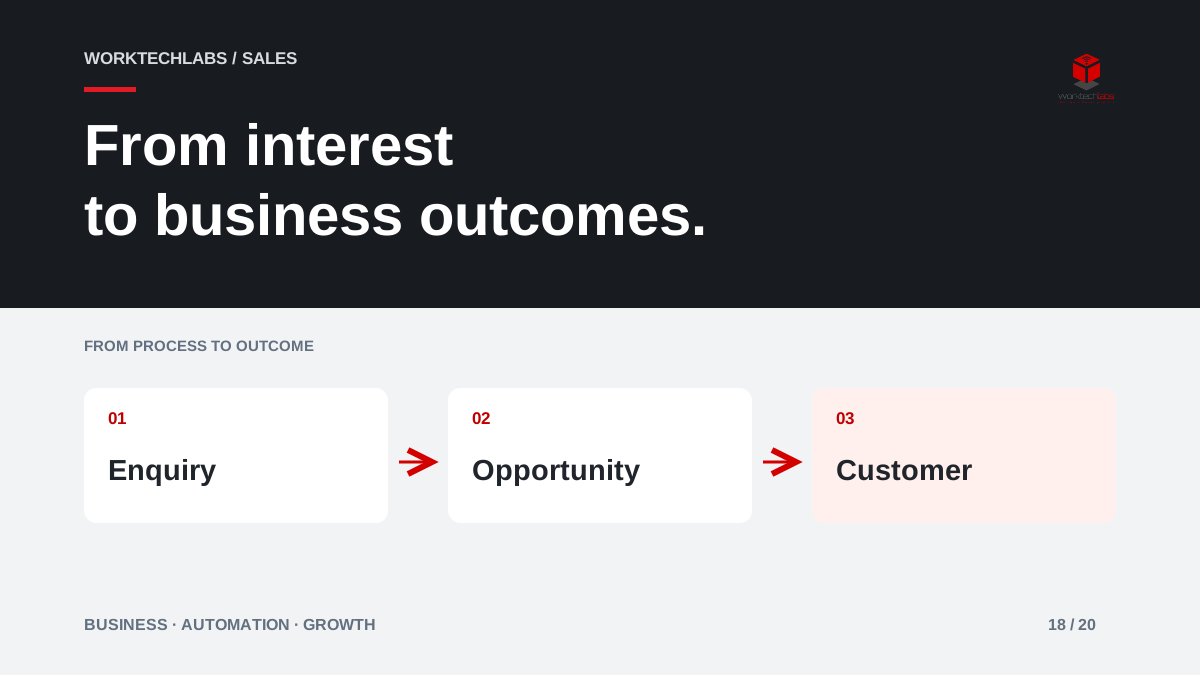
Your website reports more enquiries, while the sales team says the quality has fallen. A campaign appears successful in an advertising dashboard, but nobody can connect its leads to accepted work. These disagreements often arise because marketing activity and commercial outcomes are measured in separate systems with different definitions.
Connecting the journey can help the business understand which enquiries become useful conversations and customers. It also requires humility: attribution assigns credit according to a model; it does not automatically prove what caused a sale.
Agree what each stage means
Define an enquiry, a qualified lead, an opportunity and a customer in terms your team can apply consistently. A submitted form may be a support request, a supplier introduction or a genuine purchase enquiry. Counting every submission as a sales opportunity creates a misleading starting point.
Agree who records transitions and what evidence is required. Qualification might mean that the need matches your service and a next conversation has been agreed. Acceptance might require a confirmed quotation rather than an enthusiastic email. Definitions should support decisions without forcing staff to complete a long report before helping the customer.
Preserve source information through the handover
When a website enquiry enters the CRM, retain the available source context and a stable enquiry reference. Distinguish observed information from assumptions. If the source is unknown, keep it unknown rather than assigning a convenient channel to complete a report.
Campaign parameters can help identify a particular visit, but the same customer may return through another route or contact the business by phone. Decide which source fields you preserve and how they relate to the enquiry. Do not overwrite the original context every time someone revisits the website, and do not assume that one recorded visit describes the entire buying journey.
Connect enquiries to outcomes without multiplying them
One organisation may submit several forms before buying, and one enquiry may lead to more than one piece of work. Design relationships between contacts, opportunities and orders so reports can distinguish these cases. Blindly joining records by name can create duplicate revenue or attach a sale to the wrong company.
In an illustrative professional services business, two colleagues might enquire separately about the same project. Sales needs to recognise one commercial opportunity with several participants. Marketing may still want to understand both interactions, but counting them as two acquired customers would distort the outcome. Clear record relationships matter more than a visually impressive dashboard.
Understand what attribution models can tell you
Google Analytics documents attribution models and different scopes for traffic-source information. These concepts help explain why reports may assign credit differently even when they describe related activity. Read the definition of the metric before comparing numbers from separate platforms.
Keep modelled or estimated information distinguishable from directly observed business records. An analytics report is not always a one-to-one ledger of identifiable enquiries. Use it alongside CRM outcomes and operational evidence, rather than forcing every aggregate measurement into a precise customer-level explanation that the available data cannot support.
Review quality and timing together
Compare channels using qualified conversations, accepted work and reasons for disqualification as well as enquiry volume. Include the time needed for a decision. A complex project may take several months to become a customer, so judging a recent campaign only by immediate sales can understate its eventual contribution.
Use cohorts based on when enquiries arrived and allow comparable time for outcomes to develop. Record changes in services, prices or sales capacity that may affect comparisons. A channel with fewer enquiries may still produce useful opportunities, while a high-volume source may mostly attract requests outside your business's scope.
Respect the limits of the available picture
Some interactions happen offline or cannot be linked reliably. People change devices, share links and discuss suppliers with colleagues. Do not treat missing information as proof that an interaction did not occur. Present unknowns and coverage limits alongside the conclusions.
Coordinate measurement with the site's consent and data-handling arrangements, and collect information that serves a defined business purpose. Avoid filling analytics events with the contents of customer messages or unnecessary personal details. The measurement design should help decisions while remaining understandable and manageable for the business that operates it.
Turn reporting into a review routine
Bring marketing and sales together around a small set of questions: which enquiries fit, where they stop, how long decisions take and what the team learns from lost opportunities. Assign actions to the findings. A dashboard that nobody uses to change messaging, qualification or response is only a new reporting surface.
Worktechlabs can help connect your website, CRM and business reporting flows with consistent identifiers and definitions. Tell us which marketing numbers are difficult to reconcile with sales. We can help create a measurement journey that supports decisions while clearly separating observed outcomes, modelled credit and unanswered questions.
Official sources and further reading