
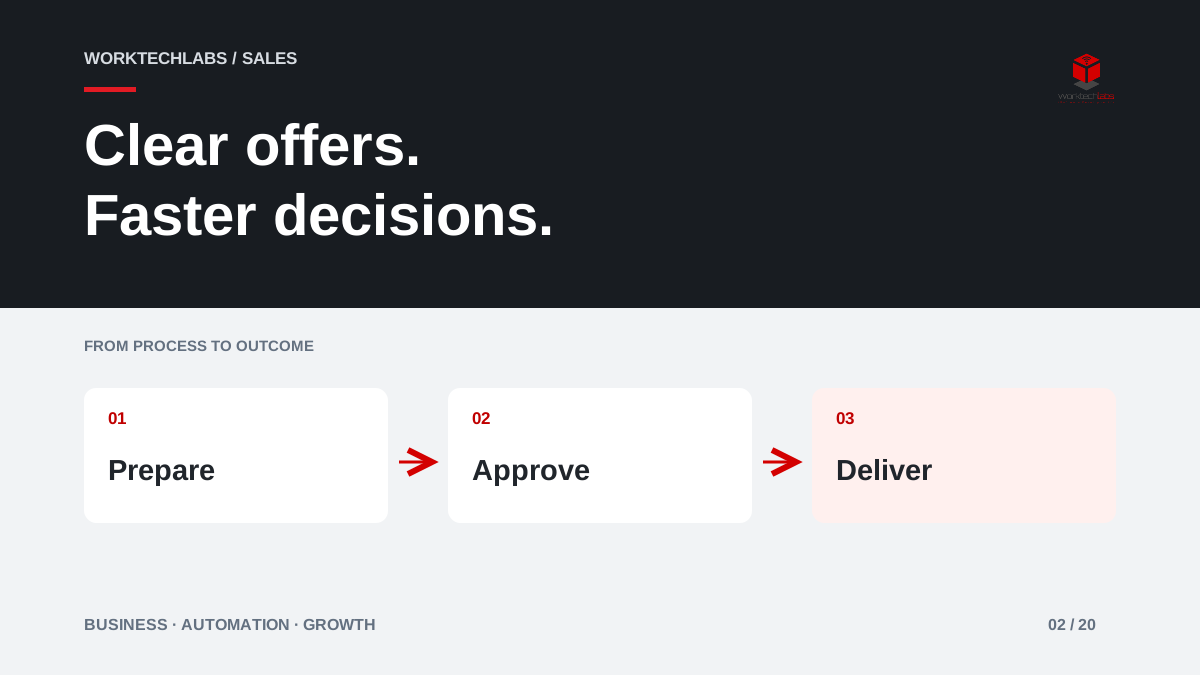
The customer has explained the requirement, your team knows how to deliver it, and the opportunity looks promising. Then the quotation waits for a spreadsheet, a price check and a manager's approval. By the time it arrives, the buyer has new questions or has moved on. Improving this part of the sales process can make buying easier without asking your team to work longer hours.
The objective is a clear, accurate offer that can become an executable order. Producing a PDF faster is only one part of that journey.
Find where quotations actually wait
Follow several recent quotations from the original request to the customer's decision. Separate time spent working from time spent waiting. A document that takes twenty minutes to prepare might spend several days moving between people because nobody knows which price list applies or who can approve an exception.
Group the delays by cause. Missing customer information requires a better discovery step. Repeated price checks suggest unclear commercial ownership. Technical feasibility questions may need an early specialist review. Each problem calls for a different intervention; putting all of them into a single automated approval queue simply makes the queue more visible.
Create an offer from controlled information
A useful quotation brings together scope, quantities, applicable prices, assumptions, exclusions and validity. Decide which system owns each fact. Sales might own the customer's requirement, while an ERP owns the product catalogue and current commercial terms. Avoid making a copied spreadsheet the unofficial authority for everything.
For an illustrative equipment supplier, the standard package could be selected automatically while installation requirements remain a review step. The automation should show where information is missing rather than silently choose a convenient default. A fast offer based on the wrong delivery location or an obsolete product is expensive to correct after acceptance.
Make approval proportional to the exception
Routine offers within agreed boundaries should not wait for the same approval as a heavily discounted or unusual contract. Define the boundaries in plain language: which products, quantities, service commitments and commercial conditions need review. Give each exception an owner and make the reason visible to the approver.
The approver needs the proposed offer and the relevant context, not an empty request saying “please approve.” Include the current version, the exception and the customer's deadline. If the offer changes materially after approval, require a fresh decision for the changed terms. An approval attached to an earlier version is not reliable evidence that the final proposal was reviewed.
Treat revisions as part of the normal process
Customers often change quantities or ask for alternatives. Keep a clear distinction between a draft, an offer sent to the customer, a revised offer and an accepted offer. Microsoft Dynamics 365 Sales documents a quotation lifecycle with these kinds of transitions. The business lesson is to make the current offer unmistakable, whatever software you use.
Do not overwrite the document that the customer already received without preserving its history. Staff should be able to explain which version was accepted and why the total changed. The customer should see an obvious reference and date, especially when several people in their organisation are comparing proposals.
Connect acceptance to delivery preparation
An accepted offer should create the next piece of work with its agreed scope intact. That may be an order, a project or a booking, depending on the business. Carry forward the approved items, delivery assumptions, contact details and exceptions so operations does not reconstruct the promise from email attachments.
Acceptance still needs validation. An expired offer may require new availability or price checks. A request to change the delivery address might affect cost or feasibility. Route these cases explicitly and tell the customer what remains unconfirmed. Avoid sending a confident order confirmation while an important condition is still unresolved behind the scenes.
Measure clarity as well as speed
Track the time to issue a complete quotation, the number of revisions caused by internal mistakes and the time from acceptance to operational readiness. Record why opportunities are lost where the customer is willing to explain. A quicker process is useful, but a low-quality offer can create rework, complaints and unprofitable promises.
Compare similar kinds of work. Bespoke projects and catalogue orders have different review needs. If you measure only average turnaround, staff may be encouraged to rush complex work or avoid recording difficult requests. Review the slowest cases to understand what the process cannot yet handle, rather than assuming every delay is poor performance.
A focused first implementation
Start with one quotation family that has repeatable products or service packages. Agree the required information, price source, approval conditions and acceptance route. Test a standard order, a discount exception, an expired offer and a customer revision. Have sales and delivery review the resulting order together before inviting customers into the pilot.
Worktechlabs can help connect quoting tools, CRM and ERP workflows, including the exceptions that usually remain in email. Share a typical quotation journey and we can identify a first improvement that reduces waiting while protecting the quality of what your business promises.
Official sources and further reading