
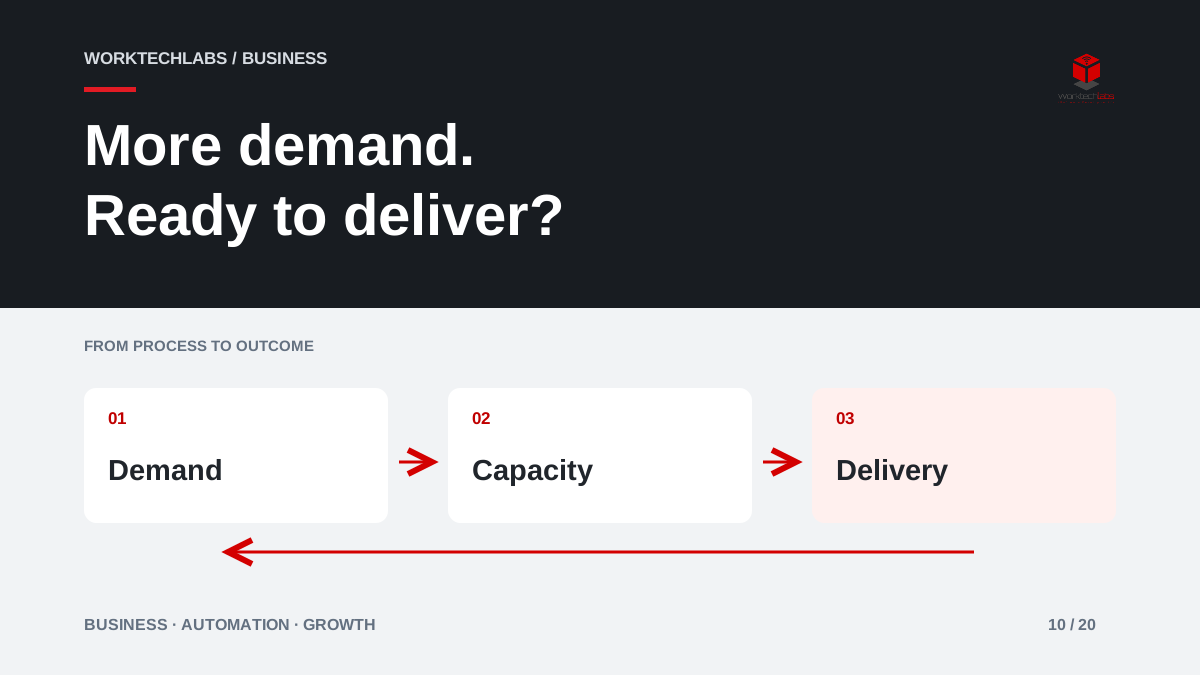
A campaign brings more enquiries, but quotations take longer, delivery dates become uncertain and existing customers struggle to get an update. The marketing has created attention that the business cannot yet handle well. Before increasing acquisition activity, it can be useful to examine the operational capacity needed to turn that attention into satisfied customers.
Automation can create room for growth by reducing avoidable coordination and rework. It cannot remove every physical, specialist or commercial constraint, so the first task is to identify what is actually limiting throughput.
Trace the journey beyond the enquiry
Follow a customer from first contact through qualification, quotation, acceptance and delivery. At each stage, ask what work is required, who performs it and how long cases wait. A business may have enough sales capacity but too few people able to approve technical proposals. Another may issue quotes quickly but struggle to schedule accepted work.
Measure queues as well as completed activity. A busy team can look productive while unfinished work grows faster than it is resolved. Separate old difficult cases from new arrivals and identify why they remain open. The constraint is often found in the decision or handover that every case must pass through.
Distinguish capacity from wasted effort
Some work requires more qualified people or equipment. Other work consumes time because information is incomplete, systems are disconnected or responsibilities are unclear. Treating both as a recruitment problem may increase cost without fixing the underlying process.
For an illustrative service company, technicians might spend part of the day calling the office for job details and correcting addresses. Better preparation could release useful time. But if every job still requires a certified specialist and demand exceeds their available hours, automation does not create additional specialist capacity. A realistic plan identifies which constraint remains after the administrative improvements.
Prioritise the bottleneck that affects customers
Choose an improvement near the current constraint. Faster data entry in a department that already finishes early may not change the customer's waiting time. A complete handover to the scheduling team might matter more because it prevents accepted work from returning to sales for clarification.
Microsoft's process-design guidance discusses automation in relation to repetitive work and throughput. Apply that lens to your own operation: estimate how the proposed change affects the complete journey, not just one person's clicks. The benefit should be visible in fewer blocked cases, more reliable commitments or less avoidable rework.
Connect sales promises to available delivery
Give sales a dependable way to understand capacity before promising dates. That does not necessarily require a complex planning system. It may begin with a shared view of confirmed work, the assumptions behind estimated dates and a clear route for exceptions.
Differentiate an indicative window from a reserved commitment. If sales can promise any date without checking delivery, increased lead volume can amplify disappointment. Agree when capacity is reserved, how long a provisional reservation lasts and who may approve an urgent exception. The workflow should reflect these decisions consistently across people and channels.
Review demand and workload together
Marketing, sales and operations need a shared view of what is arriving and what can be fulfilled. A campaign that attracts a different service mix may create a new constraint even if total enquiries remain stable. Track the type of work, not only the number of leads.
Use this information to adjust messages, qualification and scheduling. The objective is not to hide availability problems from customers. It is to set accurate expectations and direct demand towards services the business can deliver well. When a wait is unavoidable, explain it early enough for the customer to make an informed choice.
Measure the quality of additional capacity
Track waiting time, work in progress, rework and delivery reliability before and after the change. If administrative time falls, verify what happens to the released capacity. It may be used for more customer work, better preparation or overdue quality improvements. Saved minutes are not automatically cash savings or additional revenue.
Review the impact on employees too. A process that removes quiet recovery time and fills every available minute may be fragile when demand changes or someone is absent. Build a sustainable operating model with room for exceptions, learning and support, rather than defining success as permanent maximum utilisation.
A practical growth preparation project
Begin with a sample of recent customer journeys and identify the most common reason accepted work waits. Implement a focused change, observe the whole flow and check whether the constraint moves elsewhere. A successful improvement often reveals the next limit; that is useful planning information, not evidence that the first change failed.
Worktechlabs can help connect commercial and operational information through automation and integration or a focused ERP improvement. Tell us where growth currently creates pressure. We can help define an initial project that makes the business better prepared to serve additional customers before acquisition activity increases further.
Official sources and further reading